Showing posts with label Cookery books. Show all posts

29 November 2010

On My Rickety Shelves: Kitchen

Thanks to the lovely people at Random House Canada, a copy of this month's cookbook selection was delivered to my doorstep.

Kitchen
By Nigella Lawson
Alfred A. Knopf/Random House Canada
512 pages; $55

There’s a small number of authors whose new works I eagerly await: AS Byatt, Christopher Brookmyre, Stephen Fry, Nigella Lawson and Nigel Slater. Their words are smart, engaging so incredibly well honed. When I grow up I want to write like that.

When I peruse a cookbook, I skim it for more than just recipes. Without a doubt the recipes must make me want to lock myself into my kitchen and lose myself in chopping, drizzling, frizzling and sampling. Just as important is how the author coaxes me into keeping that book in my hands. I want the author to talk to me as a friend and be someone I’d invite into my kitchen. I don’t want to be talked down to, lectured to by someone with self-fashioned airs of superiority.

Nigella Lawson brings her brand of combined eloquence and common sense cookery in her new offering, Kitchen. In it, she continues her particular type of food diarisation—her first book How To Eat features a section on nursery foods and feeding very young children, others included foods palatable to younger mouths—this time as a busy working mum with equally busy teenagers.

Her recipes, as usual, range from combining simple ingredients into quick and tasty meals such as Egg and Bacon Salad to longer cooked meals such as Beer-braised Pork Knuckles with Caraway, Garlic, Apples and Potatoes. She also brings in disparate foodish inspirations from areas such as Spain, Vietnam, South Africa and Italy. The instructions are clear and easy to follow and usually accompanied by lovely photographs. Many recipes include tips about freezing, how to use leftovers and make-ahead notes.

As with her other Canadian imprints, the text appears to be the same as in the original British imprint, which means she uses weight metrics and not volume. This may be an issue for many North American cooks, but since a digital kitchen scale can be bought for the price of a couple of bottles of extra virgin olive oil, this shouldn’t be that much of an issue.

What some readers may find useful are two early sections: “Kitchen Caboodle” and “Kitchen Confidential”—the first is what’s known in some books as “batterie de cuisine,” a listing of kitchen equipment the author finds essential. What’s equally useful is her “Hall of Shame” section that lists regrettable purchases she’s made (ahem, including the slow cooker). Such lists are, of course, highly individual and should be taken with a grain of salt. Kitchen Confidential compiles her various kitchen tips on ingredients such as baking powder, sea salt and vermouth to tools and gadgets such as pastry brushes and disposable rubbery gloves and tips on baking and frying.

As with my other reviews, the proof of a book’s value is in the recipes. Here are the ones I attempted:
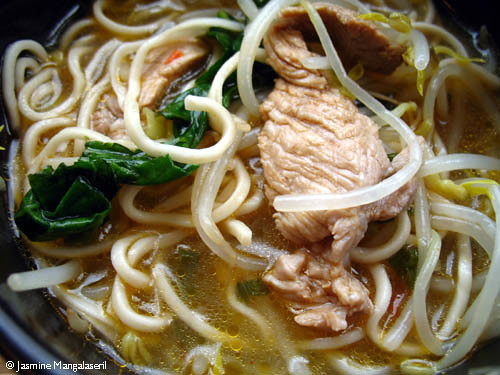
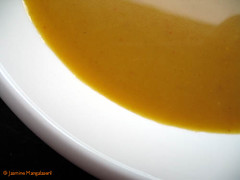
Vietnamese Pork Noodle Soup (p82)
I really like pho, but find their quantity overwhelming when at restaurants. Nigella’s version had fresh and bright flavours and it was very warming. As with any home cooked food, I can control my portion, but here I thought the noodle quantity was two to three times what I think it should have been or the amount of broth should be increased. Easily resolved the next time I make this.

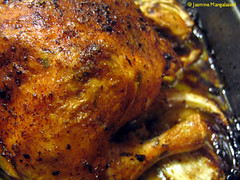
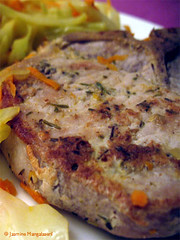
Spanish chicken with chorizo and potatoes (p100)
Delicious. Spicy sausage and roast chicken with just a hint of orange. I was so happy with this meal that I’ve since replicated it with other types of sausage and seasonings. It’s more than easy and (as you can tell from the picture) a doddle to decrease to feed one person (as opposed to six).
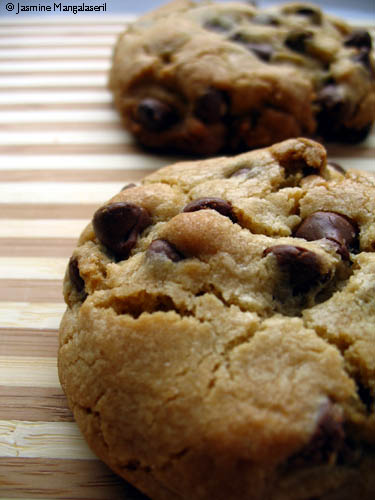

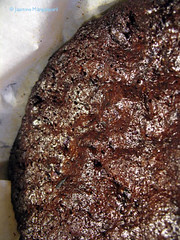
Chocolate Chip Cookies (p236)
Everyone has their own idea as to what makes a good chocolate chip cookie and this was definitely not mine. I prefer thin, buttery discs which are crispy around the edges and chewy in the centre. I also like them to be of a reasonable size (say 2” or 5cm in diameter). Hers are cakey and are dolloped in ¼ cup measurements. I would have used a teaspoon or a tablespoon at most.


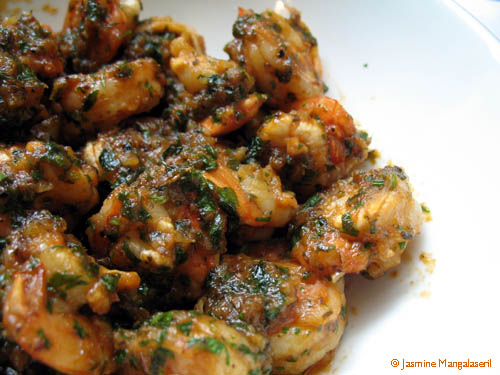
Sweet Potato Supper (p340)
This dish combines three of my favourite ingredients—asparagus, bacon and sweet potatoes—in an incredibly simply way. I loved the way the salty, smoky bacon played against the lush sweet potatoes and slightly caramelised asparagus.

So how does it rate?
Overall: 3.8/5
The breakdown:
Recipe Selection: 4/5
Writing: 4.5/5
Ease of use: 3/5
Yum factor: 4/5
Table-top test: Lies flat

Kitchen comfort-level: Easy-Intermediate
Pro: A good range of recipes ranging drawn from a number of cuisines.
Con: Based on the pho and cookies, some on-the-fly corrections may be needed.
cheers!
jasmine











AddThis Social Bookmark Button

25 January 2010

On My Rickety Shelves: Fat

Thanks to the lovely people at Random House, a copy of this month's cookbook selection was delivered to my kitchen.

Fat: An appreciation of a misunderstood ingredient with recipes
By Jennifer McLagan
McLelland & Stewart/Random House Canada
240 pages; $37.95

Fat is vilified. Whether it’s a woman’s natural curves or a recipe’s call for lard, this basic stuff which of which we’re made and need is the same stuff entertainment and corporate-sponsored “food experts” tell us to ostracise and eliminate.

Ironic, this, given in stressful times when we need comfort, we are drawn towards fat (as well as it’s taboo’d compatriots, sugar and fat)—whether it’s a bowl of rich ice cream covered in hot caramel sauce or a bolstering embrace by soft arms.

Jennifer McLagan’s Fat: An appreciation of a misunderstood ingredient with recipes
takes on populist thinking of the past 30-40 years, and tells us that fat, unadulterated by undue processing, needs to regain its rightful place in our diets.

She reminds us that up until the last century, fat was good: we wanted a “fat paycheque” so we could buy the plumpest chicken and those who didn’t get enough fat in their diets were often ill (something I still maintain), as well as what the food industry has done to degrade our collective health such as introducing quantities of trans-fat laidened hydrogenated fats and easily oxidised polyunsaturated oils.

McLagan’s well-written and thoughtful work focuses on four animal fats, some in regular, purposeful home kitchen use, but others not so: butter, pork fat, poultry fat and beef and lamb fat. While photographs do not accompany each recipe, the images provided are vibrant and lovely. The book is also dotted with mini-essays about the importance of fat in history, whether it is pemmican, Haseka “The Butter Saint” or the origins of Fat Tuesday.

What I find most helpful are the instructions for once-common bits of kitchen business such as rendering fats or removing marrow from beef bones, the latter I needed to make her Risotto Milanese. Her no-nonsense words guided me through the process well enough to produce an amazing dish.

As with my other reviews, the proof of a book’s value is in the recipes. Here are the ones I attempted:

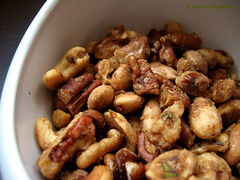
Mixed Spiced Nuts (p36)
I’m not a fan of processed spiced nuts—manufacturers tend to mistake salt and sugar for flavour. Combining the resinous hints of rosemary, cumin’s and coriander’s smokiness, salt sugar and a bit of heat, these buttered nuts were easy and almost disparagingly deliciously addictive.


Pumpkin and Bacon Soup (p83)
I liked this soup, but I didn’t love it. It was nearly effortless, but even though smoky bacon and its rendered fat were used, it lacked depth of flavour. I will make this again, but instead of using plain water, I’ll use vegetable or chicken stock or perhaps apple juice.


Simple Roast Chicken (p138)
Often simple is best. McLaglan’s recommendations very closely mimicked my own standard roast chicken recipe, and it produced a bird with juicy meat and crispy, golden skin. My only qualm is I felt 100g of butter was too much, and I’d easily halve the amount.


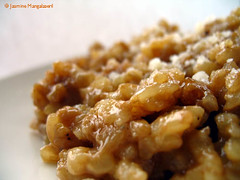
Risotto Milanese (p195)
I’ve rarely found a risotto recipe that matches the dish I had in Milan six years ago. McLagan’s recipe uses beef marrow, along with butter to make this perhaps the most luxurious risotto I’ve ever had.


So how does it rate?
Overall: 3.6/5
The breakdown:
Recipe Selection: 4/5
Writing: 3.5/5
Ease of use: 3.5/5
Yum factor: 3.5/5
Table-top test: Lies flat

Kitchen comfort-level: Intermediate
Pro: A good range of recipes ranging drawn from a number of cuisines.
Con: This isn’t a book for those who need or want to be coddled in the kitchen.


cheers!
jasmine


I'm a quill for hire!


AddThis Social Bookmark Button

13 December 2008

On My Rickety Shelves: Nigella Christmas

Thanks to the lovely people at Random House Canada, a copy of this month's cookbook selection was delivered to my kitchen.

Nigella Christmas: food, family, friends, festivities
By Nigella Lawson
Alfred A. Knopf/Random House Canada
288 pages; $50

Christmas does strange and occasionally deluded things to people. Overcome with seasonal cheer, nostalgic traipses to family dinners which may or may not have actually happened, or simply psychic pressures for those who need a GPS to find their kitchens to become instantaneous domestic goddesses (or gods) sees many people planning grand yet intimate entertaining. Booksellers line windows with covers featuring beautifully simple yet ornate tables complete with celebrity authors with whiter than white teeth bared in a welcoming grin that exudes “There’s no way you can mimic in a few hours what the small militia of cooks, stylists and other sorts take weeks or months to do…but I’ll let you believe you can…” Television specials are little better: perfectly coiffed, presenters with nary a drop of exertion or stress-induced dew punctuates the ease in which Stepford homemakers can pull together a perfect Christmas for the perfect set of family and friends.

Perfection is never my goal. Deliciousness is. Mind you…when others seem to push their culinary envelope, I’m more than content to fall into familiar routines. Don’t get me wrong. I love my November-December foodish rituals: fruitcakes and sticky toffee puds, dozens upon dozens of cookies, turkey with the trimmings…cognac. There’s a sense of comfort in doing the same old-same old. But at the same time there’s a part of me that searches for something new or, at the very least, a new-to-me way to prepare something not so new…that doesn’t eat up the last remaining moments of a far-too-crammed schedule.

Nigella Lawson’s latest recipe collection, Nigella Christmas: food, family, friends, festivities, promises readers practical, no-nonsense holiday inspiration. A companion tome to her 2007 three episode Nigella’s Christmas Kitchen, Lawson provides additional recipes and advice to those hoping for entertaining that can run from elegant to homey.

The book itself is what I’ve come to expect from a post How To Be A Domestic Goddess Lawson: gorgeous, glossy with La Lawson herself as the ultimate bit of food porn, tucked between sparkly-topped biscuits, glistening and glazed cocktail sausages, and juicily studded gammon. Recipes are divided into nine sections, each focussing on a different part of cheery holiday entertaining, including suggestions for “mass catering” and not-so mass catering for cocktail parties, side dishes friendly suppers, Christmas baking edible gifts, pages on both the main holiday meal along with a Christmas brunch, hot drinks and, as is her way, foods to combat the season of overindulgence. Heck. She even offers a stress-relieving Christmas rota to help plan the big day.

For me, Lawson’s lure is her words. My goodness, she’s not afraid to use her vocabulary…nor does she seem overly concerned with dumbing herself down for the masses—where else, in modern writing, would one read
“So the following, I hope, will allow the abstemious to raise a garish glass
with the rest of us.”
Her turns of phrase are voiced with experience, practicality and an honesty that never seems forced or contrived. One of my favourite lines is about the Tiramisu Layer Cake (p93):
“I wish I were the sort of person who could make enough but no more, but that’s
never going to be the case: when I made this for my brother’s birthday, he came
back round for a couple slices the next day. And that’s the way I like it.”

The recipes are trademark Lawson: practical, delicious and rooted in tradition but updated to modern flavours and tastes. For example her “luscious dinner for 6-8” (p70) features a lamb and date tagine, red onion and pomegranate relish with gleaming maple cheesecake for dessert. No, in this case it’s not everyday food, but it’s warm and hearty food to be shared with friends. Each recipe is easily followed and has make-ahead or freeze-ahead tips within the margin. Most, if not all, are photographed. Most of the recipes serve at least six people, with relatively few for smaller groups of diners.

One thing I was quite concerned about prior to receiving the book was North American publisher’s preoccupation with translating weights into volumes—grams of flour to cups of flour. Rarely, in my experience, are the Americanised instructions as accurate as the original (and dare I venture a guess that there are problems when going the other way ’round); mentions of problems in her earlier tomes are scattered far and wide throughout the blogosphere. Thank goodness the good people at Random House Canada did not winkle away at the original text. As far as I can tell everything is left in its original English. Yes this may pose problems for some, but really…all you need to do is buy a scale (mine’s from Canadian Tire) and look up the Centigrade to Fahrenheit conversion.

All that said, the value of a cookbook is in the cooking. Wherever possible, I scaled down the recipe to serve four or so people.

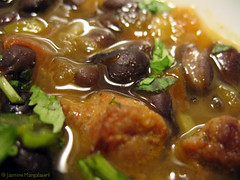
Cuban Cure Black Bean Soup (p264)
This is what I call a “pantry soup”—pretty much everything can be procured from a tin (okay, not the sausage, herbs or onions, but still) and combined into something quite tasty. This is my new favourite soup—spicy, hearty and a flavourful broth.


Potato, Parsnip and Porcini Gratin (p64)
Loved the smokiness and sweetness from the star anise and parsnips. The only thing I didn’t like was how the fat separated from the cream, leaving a bit of an oil slick. I’d probably increase the amount of milk while decreasing the cream.


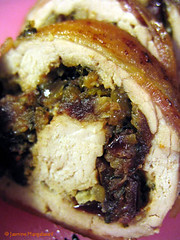
Rolled stuffed loin of pork (p 158)
My friend called this pork-stuffed pork, wrapped in pork, which is an incredibly accurate description. A great balance between sweet and salty and very, very easy to make. Chose to forego the ruby sauce...wasn't in a saucy mood.


Incredibly Easy Chocolate Fruit Cake (p180)
As its title beckons, it is incredibly easy to make. I’ve made it for our Christmas pudding so I can’t say how it will taste…but it’s bound to be moist—not for its regular boozification, but for the chopped prunes.


Truth be told, I’m usually sceptical about holiday cookbooks—they overpromise on dreams and underdeliver on ease. Not Nigella Christmas. Her home-friendly recipes and guidelines make this book extremely easy to use…at Christmas and whenever you need to cook a special meal for family or friends.

So how does it rate?
Overall: 4.5/5
The breakdown:
Recipe Selection: 4/5
Writing: 5/5
Ease of use: 4.5/5
Yum factor: 4.5/5
Table-top test: Lies flat

Kitchen comfort-level: Intermediate
Pro: Gorgeous words that accompany easy and delicious recipes
Con: This is crowd cooking—not many options for intimate entertaining

cheers!
jasmine


AddThis Social Bookmark Button

14 November 2008

On my rickety shelves: The Food You Crave

Thanks to the lovely people at Random House Canada, a copy of this month's cookbook selection was delivered to my kitchen.

The Food You Crave: Luscious recipes for a healthy life
By Ellie Krieger
Taunton Press/Random House Canada
320 pages; $33

Admittedly, whenever I hear any combination or derivation of the terms detox, recipe low-fat, low-salt, low-cholesterol or healthy I cringe. Years of reading about this diet and that lifestyle, vilified foods, praised foods, not to mention the eventually contradictory nutritionism conditioned me to block out most of the good-for-you, you-should-eat-this-way noise that bombards us daily. My personal eating mantra is pretty simple…and very reminiscent of Michael Pollan’s “Eat food. Not too much. Mostly plants,” along with avoiding packaging that tries to convince you of the contents’ edibility.

Granted, it can be difficult finding food (and yes, it depends upon what you declare “food”—My Dear Little Cardamummy is convinced lobster isn’t food). Finding food-like things is easy. I’m not saying there isn’t a place for food-like things—I fervently believe a healthy diet does include the occasional Swedish berry—but too many food-like things can be an issue: hence the proliferation of the above, cringe-worthy-to-me terms.

The thing is, food (by my definition food is healthy) should taste good. Unfortunately, it seems as if many of the healthy-monikered foodstuffs I’ve eaten don’t taste good—they are bland, soggy, mealy...boring.

I’ve never understood it.

Shouldn’t one reward good behaviour? As in: if you avoid overreliance on polyhydrogenatedsalisucraloseinatified foods by eating (umm…) real ingredients, the food should not only taste good, but also make you feel good and hopefully happy.

Take the vast majority of the Milk Calendar recipes I’ve been cooking through this year: they were developed to use dairy and have some sort of nutritional balance. Well…some weren’t bad, but others tasted so horrid, I wonder what on earth happened to the recipe developers’ and taste testers’ mouths (and brains) to ever declare those recipes…tasty.

So when I flipped through this month’s cookery book selection, I was a little nervous. Ellie Krieger’s The Food You Crave: luscious recipes for a healthy life had the warning signs of a book that “meant well”—earnestly written with an eye towards nudging readers towards the healthy lifestyle du jour. She is a registered dietician and hosts Healthy Appetite, on the US’s Food Network.

Her expository was heartening to me…in fact, Krieger won me over in the introductory paragraph to her food philosophy:

“In my food world, there is no fear or guilt, only joy and balance. So no ingredient is ever off-limits. Rather, all of the recipes here follow my Usually-Sometimes-Rarely philosophy. Notice there is no Never.”

Here’s a compliment: Quite honestly, if it weren’t for her tips on things like building a better muffin and Mediterranean-inspired eating and boxes of nutrient numbers that accompany each recipe, I’d not think of this as a healthy eating book. I’d think it was a “normal” general-purpose cookbook. Really. The unappetising nature of many “healthy” or “diet” recipes is pretty much absent in her suite of recipes. Breakfast can include Poached egg with herb-roasted turkey breast and sweet potato hash, dinner can be Spinach with warm bacon dressing, and supper can be Tuscan roasted chicken and vegetables. And dessert? Banana Cream Pie. Need I say more?

The book itself is fresh and light. Well-written and easy to follow recipes punctuated with the occasional (lovely) photograph. The entire book itself is simply designed and, well, inviting.

Every recipe I tried worked really well produced delicious food that made me feel…good. What more can I ask for?

Curried Butternut Squash Soup (p 78)
Incredibly easy and very tasty, and (like many good soups) was incredible the next day. I used a the hot curry powder I have in my pantry…probably should have reduced the quantity a bit.


Sage-rubbed pork chops with Warm Apple Slaw (p 195)
The chops were so intuitive, I wouldn’t call it a recipe…but it was a good reminder of how tasty simply prepared food can be. Apart from the unending chopping, the slaw was easy to pull together. I think it could have used a little sugar or honey, but otherwise was very tasty.


Mocha cake with Mocha Cream Cheese Frosting (p 282)
This was a very good and moist cake. As I’m of the school that believes cake should have a tender crumb, so the whole wheat nubblies in the crumb turned me off. I’m not a fan of dolloped frosting, so the relatively thin layer was just perfect for me.


The Food You Crave is exactly that. The food you crave.


So how does it rate?
Overall: 4/5
The breakdown:
Recipe Selection: 4/5
Writing: 4/5
Ease of use: 4/5
Yum factor: 4/5
Table-top test: Lies flat

Kitchen comfort-level: Novice
Pro: Easy and delicious healthy foods
Con: Can’t think of any.


cheers!
jasmine


AddThis Social Bookmark Button

14 September 2008

On My Rickety Shelves: Simply Delicioso

Thanks to the lovely people at Random House Canada for providing this month's selection in my mailbox.

Simply Delicioso: a collection of everyday recipes with a Latin twist
By Ingrid Hoffmann with Raquel Pelzel
Clarkson Potter Publishers/Random House Canada
256 pages; $37.95

One of today’s problems/pleasures is that different and new-to-many cuisines arrive by way of fast fooderies, frozen dinners and homogenised chain restaurants that try too hard to be “authentic.” Take Mexican for example. My first taste was via a mall’s food court: plasticized, salinized and bereft of fresh flavours and varying textures. I was a teenager: I ordered. I paid. I ate. But that first taste provided glimmers of a hope of what could be a vibrant and absolutely delicious cuisine, and it began an on-again, off-again wistful search for good Mexican food and eventually tasty foods from Latin and South America: Yo quiero el buen alimento latinoamericano (thank you, Babelfish).

Ingrid Hoffmann’s Simply Delicioso hopes to tear people away from such corporate-ised Latin foods and convince them that tasty foods from Mexico, Central and South America are easily made in their home kitchens. Hoffman is a television chef, with shows on both Food Network and Galavision/Univision; her book takes its name from her Food Network show.

The book offers 11 chapters of foods and drinks ranging from breakfasts to appetisers to fish and meats, along with two sections on pantry staples. Every chapter is introduced by Hoffman, explaining the role of the following recipes in her family’s or a culture. Beautiful photographs punctuate the book—not every recipe has a photo (nor should they have). The instructions are clear and well-written, with many including “chica tips”—advice and suggestions about some ingredients. Some are helpful such as creating a whirlpool in simmering water to create “perfectly” poached eggs; some are banal such as liberally spraying baking trays with pan spray to avoid heavy duty scrubbing, while others read somewhat bizarrely for a cookery book such as combing mashed avocados through your hair and wrapping your head in cling film for 20 minutes before rinsing out the green goo. The last tip would have been fine if this was a health/beauty book or a treatise on avocadoes, but it’s not.

Now this segues nicely into what bugs me about this book. Most of the expositional writing is good, but it is littered with enough sugary cutsey-isms that turned my stomach. From “appeteasers” the interjections of “que rico” and “fantastico” the voice in my head quickly morphed from warm and friendly to slightly hyper and rather bubbleheaded. I’m sure Hoffman is a lovely and intelligent woman who obviously loves life and food. I can take her food seriously, but I can’t take her seriously. Add to this a niggling thought that if she were not a TV chef she probably would not have been given this book contract. It feels like part of a big marketing machine. She tells readers to go to her web site to get updates to pantry staples). There are unnecessary photographs of Hoffman—not showing a technique, nor her with the completed recipe (or at any stage of the recipe) but odd photos that have nothing to do with what’s on the page. Yes, she’s very pretty but…

Every recipe I tried worked really well (because of the machine behind her, I’d be surprised if they didn’t) and produced delicious foods (as promised in the book’s title).

Dad’s Absolutely Amazing Brandied Shrimp (p 118)
As long as you have thawed shrimp (and the other ingredients) you have an incredibly quick and delicious meal. It was so good I’ve made it twice in the past month…and may make it again tonight. She suggests pairing it with rice or pasta—I prefer it with crusty white bread to sop up the all the lovely saucy bits.

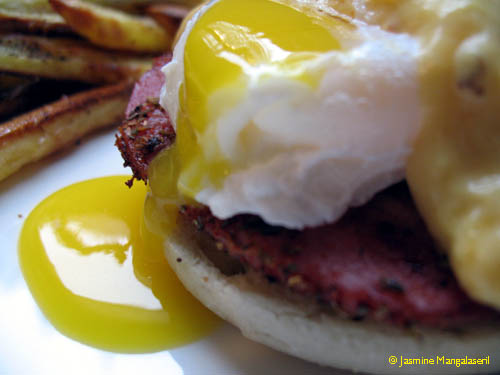
Eggs Benedict with Chipotle Hollandaise (p 32)
I’m an eggs benny fanatic—if I see it or a variant on a menu I’m compelled to order it. So when I saw this recipe, I knew I had to have it. Her hollandaise instructions were easy and produced a nicely spicy sauce which worked well with the oozy eggs. When added to the spicy slabs of bacon and I was a very happy girl.


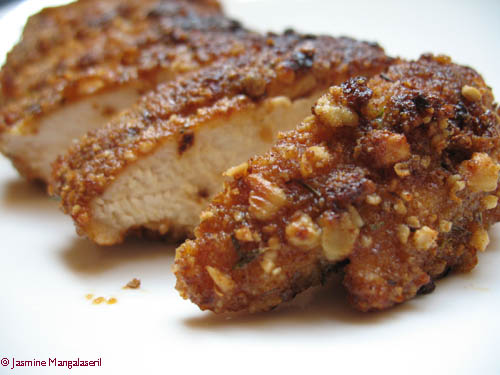
Peanut-crusted Chicken Breasts (p 131)
As I’m not really a mayonnaisey person I chose to not serve it with the suggested chipotle mayo (besides, I’d made the hollandaise for the eggs benny and an aioli for another dish). As nicely spicy-crunchy as the chicken was, it probably would have benefitted from a squeeze of lime in lieu of the sauce.


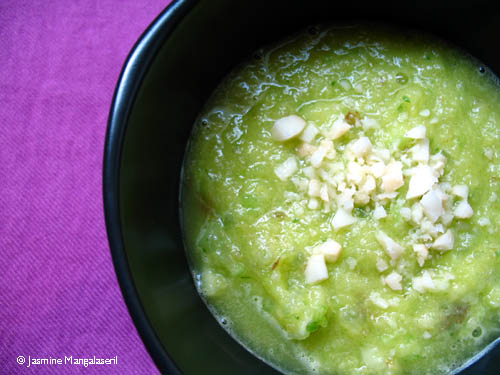
Tropical Pineapple Gazpacho (p 91)
Wow: gorgeous colour and sweet-hot-sour tasty goodness. This was incredibly easy—my only wish was that I was more patient and didn’t let it sit long enough—the leftovers which I had the next day—were so incredibly delicious.

Simply Delicioso promises on its delivery of delicious and simply-prepared Latin and Latin-inspired foods.


So how does it rate?
Overall: 3.5/5

The breakdown:
Recipe Selection: 4/5
Writing: 2/5
Ease of use: 4/5
Yum factor: 4/5
Table-top test: Lies flat

Kitchen comfort-level: Novice
Pro: Allows home cooks to easily prepare delicious Latin and Latin-inspired food
Con: Don’t get caught up in the exposition.


cheers!
jasmine


AddThis Social Bookmark Button

12 August 2008

On my rickety shelves: Beyond the Great Wall
Thanks to the good people at Random House Canada, I received a copy of the latest offering by Jeffery Alford and Naomi Duguid.

Beyond the Great Wall
By Jeffrey Alford and Naomi Duguid
Random House Canada
304 pages; $70.00

Beyond the Great Wall: recipes and travels in the other China by husband and wife team Jeffrey Alford and Naomi Duguid’s is one of those books that jumped my review queue. I try not to let that happen: my usual rule review them as they come in but every so often a book beckons to be let in a little early. And since the 2008 Olympic Games are in Beijing, I thought this was the perfect book for August.

Alford and Duguid are travelers, cooks, photographers, and writers, and are fascinated in understanding and appreciating home cooking within their cultural context. They’ve travelled throughout the world, but spend several months each year in Asia. Several of their previous titles are award-winners: Flatbreads and Flavors: A Baker's Atlas was named James Beard Cookbook of the Year and won the Julia Child First Book Award; Seductions of Rice was named Cuisine Canada's English Language Cookbook of the Year, and Hot Sour Salty Sweet: A Culinary Journey through Southeast Asia was named James Beard Cookbook of the Year. They guest-teach and lecture about food traditions around the world.

As the title suggests, the authors take readers and cooks beyond food fare commonly found in their typical local Chinese restaurants. You won’t find mushu anything, nor will you find nuclear day-glow red sugary sauces clinging onto deep-fried globules of meat and fat. You will find introductions to the cultures and histories of the various peoples that make up modern China, including Dai, Miao, Taji, and Uighur. It’s the authors’ treatment and respect of these cultures, told in a mix of essay and reminiscence that drew me in and kept me reading.

Like many of their other titles, Beyond the Great Wall is one of those utterly gorgeous works, filled with intimate and engaging pictures of various foods and the people who cook and eat them. Not all the photos are theirs—studio photographs are credited to Richard Jung—but the food photography is not cold and impersonal like so many food porn offerings tend to be. Images of tree ears, a kitchen kit, and deep fried whiting all look as if they were made and served in someone’s home; the bowls and trays are worn and the light is generally warm. The people who appear are filled with character—from Tibetan monks and nuns to a man happily slurping from his noodle bowl all illustrate snatched moments from places and lives many of us in the West may never encounter.
The problem with an oversized book brimming with full-page images is that it’s bound to be seen as the equivalent of the conventionally pretty blonde girl with the big doe eyes: not much use for anything but an aesthetic decoration. But guess what…this pretty girl not only can hold a conversation but also probably write an anthropological dissertation on tribal nomads of the Gobi desert. In other words—it’s more than a functional cookbook because it gives the readers cultural and social information about the foods and people who cook them. There is a plethora of foods presented including condiments and seasonings, soups, salads, mostly vegetarian dishes, noodles and dumplings, breads, drinks and a number of different meats.

What I really enjoyed was combining simple and tasty ingredients to make hearty and filling dishes. The recipes generally work well but I must say some of the instructions confused and frustrated me. I also noticed an oven temperature (385F) that didn’t seem to follow standard Fahrenheit or Celsius scales.

When choosing my four sample dishes, I looked for different cuisines to try as most of my Chinese-food eating have been labelled as Cantonese, Sichuan, Sinagapore or Canadian-Chinese. Two came from Tibet, while the others were Sichuan and Hui.

Beef with Mushrooms and Cellophane Noodles (p 280) Comfort food. Plain and simple. This Tibetan dish of meat and mushrooms in a gingery broth is also known as ping sha (ping meaning cellophane noodles and sha meaning meat). It came together so easily and quickly—I will probably continue to make variants of this as a mid-week lunch.


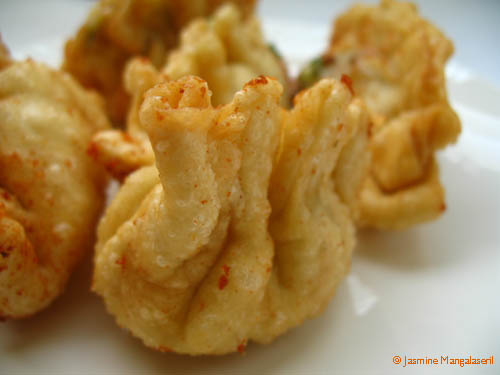
Cheese Momos (p 212)
With the words “cheese” and “momos” how could I not make these? These Tibetan dumplings are made from basic dough and filled with an equally simple filling of savoury cheese and green onions. Deep fat frying made them good.


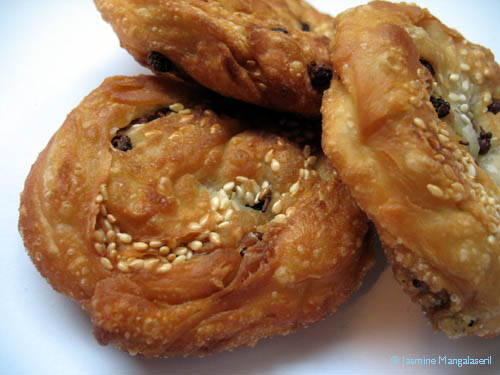
Flaky Fried Sesame Coils (p 202)
These are a stovetop-fried version of the oven baked Sichuanese shaobing flatbread. The bread was very easy to make, but the coil-shaping ritual drove me a bit loopy. After a batch or two, I just made spirals. I know it affected the flakiness, but it didn’t matter—they were still tasty with bits of astringently spiked heat from the Sichuan peppercorns and sesame seeds.

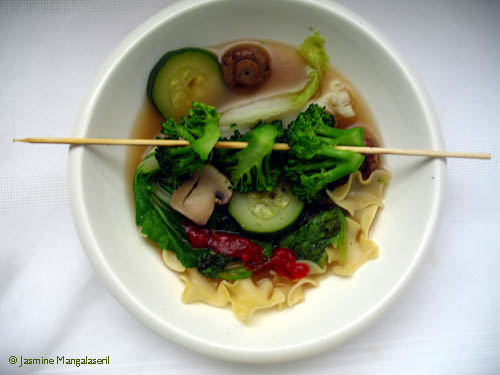
Hui Vegetable Hot Pot (p 117)
This soup—as delicious as it was—was more than a pain and a half to put together. You are essentially making a shish kabob soup, skewering like veggies together and cooking them in separately, according to cooking time. I’m not a good skewerer, I guess as many veggies fell off the sticks and into the soup…and I found stabbing broccoli with a pointy stick futile. Next time the broth will be made and the veggies added and kept in the broth.

Beyond the Great Wall delivers a fascinating travelogue, an ode to traditional Chinese cookery and an accessible series of cultural studies. Anyone interested in learning and trying “real” Chinese cooking would do well by this book
So how does it rate?
Overall: 3.5/5
The breakdown:
Recipe Selection: 4/5
Writing: 3.5/5
Ease of use: 3/5
Yum factor: 4/5
Table-top test: Pretty much lies flat

Kitchen comfort-level: Novice-intermediate
Pro: Contains a wide range of foods representing a number of different Chinese cultures
Con: Some of the instructions could be better written.


cheers!
jasmine


AddThis Social Bookmark Button

08 June 2008

On My Shelves: Anita Stewart's Canada

Thanks to the kind people at Harper Collins Canada, I found a copy of Anita Stewart's Canada in my hot little hands.

Anita Stewart’s Canada
By Anita Stewart
Harper Collins Canada
336 pages; $34.95

I must admit when I heard that Anita Stewart (aka “Wonder Woman of Canadian Cuisine”) was undertaking what sounded to me like the equivalent of The Big Book of Canadian Cooking, I looked forward to what she’d present.

For those of you who don’t know Stewart, she’s a culinary icon up here. Passionate about Canadian food along with the people who grow, produce, cook and eat it, this culinary activist and “gastronomer” spent 30 years discovering and trying to define Canadian Cuisine. Her journey includes penning 14 cookbooks (including this one) and a regular gig on CBC Radio One’s Fresh Air. The founder of Cuisine Canada, an organisation for food professionals that promotes fine Canadian food and wine, while administering Canadian cookbook awards, she also sits on the jury of the World Food Media Awards.

Anita Stewart's Canada is part cookery book, part reference book encompassing bits of anthropology, botany, history and sociology, and part call to arms regarding local eating and food production, all punctuated with photographs taken by her or Robert Wigington.

Because of how the book is put together, I think the writing is of greater importance than in most other cookbooks. Stewart’s writing is easily divisible into three voices –the storyteller, the research historian and the food activist:

Stewart the storyteller includes some of the interesting people she’s met in her travels such as Diane Bernard who harvests seaweed, Roger Dufau who owned Toronto’s Le Petit Gourmet and Devini DeSilva, a research associate at the University of Saskatchewan. Stewart’s storytelling draws in the reader to how these people or their foods have added to Canadian eating.

Stewart the research historian can weave an interesting story such as the Three Sisters soup and its ingredients' roles in First Nations’ culture but she can mire the reader in dry facts and figures such as the nutritional benefits of oats. One of the more interesting facets of this book is how she tracks immigrant groups and their stories: sidebars on groups such as the Brazilians, Iranians, Jamaicans, Malaysians, Portuguese and Swiss in Canada help to provide readers a fuller picture of who it is that makes up this nation.

Stewart the food activist is earnest but quite honestly comes off as a bit preachy. Because of that I think it’s the least impressive and effective of the three—granted this could be because I am generally fatigued by the seemingly unending influx of food activist-warriors. Whether she’s telling us that the Atlantic Salmon Federation is “ringing alarm bells and mobilizing volunteers” or being “blown away” by a sac of potatoes endorsed by the World Wildlife Federation, I think there could be a more successful way of relaying this information to readers.

A reference book is really only of use if it has a good and thorough index. Unfortunately, this one doesn’t. A few weeks after reading it, I wanted to find a particular recipe, but could only remember its originating culture. Other recipes were listed, but not this one. After a couple of attempts with main ingredients, I finally found it. Add to this my trying to find a specific reference to Samuel de Champlain (who is mentioned throughout the book) and the L’ordre de bon temps, and I was more than frustrated when neither appeared in the index.

This book’s strengths lie in its cookery portion. Quite honestly: I like it. I think it identifies the many flavours and facets of Canadian cuisine and makes people think beyond the obvious.

The book isn’t divided into the traditional breakfast, lunch, supper, snacks, dessert and other. Nor is it really broken into headings such as breads, meats and drinks. Stewart has instead cleverly divided the collected 150-ish recipes into main ingredients, to certain extent mimicking their introductions to Canada’s dinner table. She starts with the Original Palate (what was here before European settlement), then discusses Maple Honey and Molasses, Corn Beans and Squash, Salmon, Fish and Shellfish, Meat and Poultry, then Gran, Potatoes, Dairy and Eggs, Fruit and Nuts and ends with what she calls The Contemporary Palate (partly the product of food science, partly the product of early 21st Century tastes and fashions).

Here she delves into samplings some of the many cultures which have found their ways to Canada. You can find recipes for Australian Pavlova, Finnish Coffee Bread, Greek Bougatsa, Japanese Gyozas, Malaysian Curry Chicken with Potatoes, Ismaili Peach and Black Pepper Potatoes, Russian-Jewish Halupches and Sri Lankan Coconut Roti along side Buckwheat-Buttermilk CrĂŞpes, Butter Tarts, Classic Chicken and Dumplings, Crispy Potato Pancakes with Smoked Salmon and Maple Pouding Chomeur. I think because so many of the recipes come from home kitchens, they work, are uncomplicated and pretty easy to throw together. They are written with common sense in mind and (at least the ones I tried) came together really easily. Better yet, they were pretty tasty.

And which recipes did I try? I’ll be very honest and tell you that I have never flagged so many recipes in a cookbook sent to me to review--20ish, I think--they all just looked good. Somehow I narrowed them down to four—two I’d consider “traditionally Canadian” and two representing the cuisines that have added to our national menu.


Jamaican Jerk Pork (p 126)
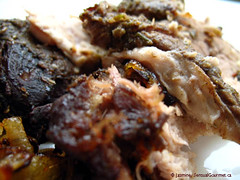
Whenever I go to a Caribbean restaurant, I gravitate towards the Jerk Pork. I know there are many other delicious things to have, but a good JP is usually why I’m there. I was very surprised at how easy it was to make. My only problem was of my own doing—the scotch bonnets I bought were pretty mild so the pork could have been zippier (but yes, my fingertips were a bit tingly). I’m going to try this again and either increase the number of peppers or try and find hotter peppers.


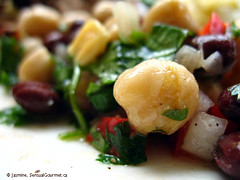
Karen’s Brazilian Black Bean and Chickpea Salad (p38)
In hot weather season I prefer to lunch on chickpea salads. This one is very easy and would do well at a summer barbecue. Its combination of coriander leaf, lime and apple cider give this salad was very pleasant.


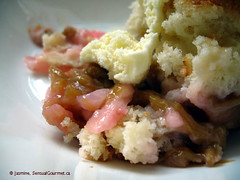
Nova Scotian Rhubarb Cobbler (p267)
Yup, this is where my rhubarby bounty went. This is one of those recipes that scream springtime in Canada and springtime in someone’s home kitchen. It’s very simple to put together and very satisfying coming out of the oven.


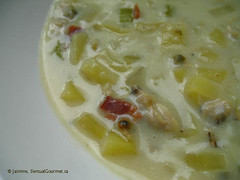
West Coast Clam Chowder (p90)
A good creamy clam chowder is always welcome in my soup bowl on cold nights. This chowder was so easy to put together and not too bad. I’ll probably make it on a regular basis once the temperatures dip.


Anita Stewart’s Canada is a pretty major undertaking. It traces the many histories of our land—social, cultural and ethnographic as well as botanical and agricultural—and synthesizes this information into a sampling of diverse dishes that donate to the definition of what food is in Canada.

So how does it rate?
Overall: 3.5/5


The breakdown:
Recipe Selection: 4/5
Writing: 2.5/5
Ease of use: 3.5/5
Yum factor: 3.5/5
Table-top test: Pretty much lies flat

Kitchen comfort-level: Novice-intermediate
Pro: It gets people thinking beyond maple syrup, salmon and poutine.
Con: Uneven writing and inadequate index make the prose difficult to get through and specific recipes can be difficult to find.


cheers!
jasmine


AddThis Social Bookmark Button

04 May 2008

On My Shelves: The Sweet Melissa Baking Book

Thanks to the kind people at Viking Studio/Penguin USA, I found a copy of Melissa Murphy's The Sweet Melissa Baking Book in my hot little hands.

The Sweet Melissa Baking Book: Recipes form the Beloved Bakery for Everyone’s Favorite Treats
By Melissa Murphy
Viking Studio (Penguin Group USA Inc)
240 pages; $27.00


I’m a bit of a sucker for baking books. Big, little, pie-centric, cake-focussed, full-colour and glossy, home made and photocopied, around the world in 400 pages, wham, bam, bake it ma’am—if I’m not careful my rickety shelves would tumble under the weight of those instructions that list piebirds, spring-form pans and recommend strips of baking parchment. They don’t have to be patisserie-perfect, but it’s usually a treat to read tips and tricks of those who’ve dedicated a part of their lives in pursuit of all things made of fat, flour and sugar (with the occasional fruit or nut tossed in for good measure). Melissa Murphy’s collection of her bakeshop’s treats, The Sweet Melissa Baking Book, gives fans—and those of us who’d like to be fans, but for want of a transporter aren’t—the ability to turn our home ovens into satellites of her famed patisserie.

A graduate of New York’s French Culinary Institute, Melissa Murphy is the chef-owner of the Sweet Melissa Pâtisseries in Brooklyn, New York. Her bake shops have been featured in such publications a Food and Wine and The New Yorker, and she has contributed articles to such magazines as Bride’s Magazine, The New York Times Magazine and Pastry Arts & Design. Sweet Melissa Patisseries won the 2007 Zagat Marketplace Award for "Best Tarts and Pies" in New York.

Murphy’s 100-plus recipes are sectioned into six: breakfasts, snacks, cakes, fruits, special desserts and candies, all (I assume) from her pâtisseries. Photographs are few and far between—eight full-colour images illustrating a handful of recipes along with half a dozen black and white bakeshop shots—treats in their natural habitat, if you will. The limited illustrations may turn off some potential book owners and perhaps some of the inexperienced or even insecure home bakers, but I think the focus on text is exactly where it should be.

My proclivities lead me not to care what a food stylist does with a slice of cake or the lighting glinting off a fresh berry. I care more about the taste and ease of preparation; the latter is directly linked to the quality and clarity of written instruction. Murphy’s instructions are generally well-considered and ordered making it easy to attempt any of her sweet (and the occasionally savoury) treats. The recipes are easily adaptable to the baker’s palate as she sometimes offers variants to main recipes. Her Chocolate Orange Macaroons (p74) morph into Lemon Macaroons, while her Sweet Muffins recipe (p4) comes with four filling suggestions—Fresh Peach, Strawberry Muffins with Fresh Lemon and Rosemary, Orange Blueberry Muffins with Pecan Crumble and Pear Cranberry Muffins with Gingersnap Crumble.

Murphy’s text offers hints, tips and professional advice—things that many home bakers seek out. Some sections have dedicated pages of advice: in “It’s Somebody’s Birthday!: Special Layer Cakes” Murphy’s seven-page introduction includes words of wisdom about assembling layer cakes, both split and unsplit layer cakes, while “What Will We Do With All This Fruit?” includes four pages that discuss flour, fats, water and techniques for pastry-making. Many recipes include “Pro Tips” such as how to make your own vanilla sugar or what sort of bread to use in bread puddings.

For the most part, this is a good book but there are a few caveats. The first is a general warning about sweetness. Yes, I know this is a baking book, filled with lovely sweetie cakes, squares and pies, but I found the treats to be a bit too sweet for my liking. In each of the sweet recipes I tried, I could have very, very easily reduced the amount of sugar by about 25 per cent and not have undermined the yumminess of the final product. Related to this is my second concern: in this day and age where focus is put on childhood obesity, the rise of Type Two Diabetes and the general free-wheeling of sugar in the North American diet, I found “After-School Snacks” bordering on irresponsible—parents I know would not make these available to children between home time and supper because they’d be so wired (and yes, I know these really are treats and hopefully no parent would regularly provide these goods to their children, but to call them “after school snacks” is really too much). The final thing I didn’t care for was the lack of baking times and temps in the pie recipes. I suppose Murphy thought that as bakers would follow the pastry recipes found on other pages, they’d naturally flip back and forth—I found it annoying and would prefer to have the oven and timer info with the actual recipe. Oh, yes, add my usual displeasure about the use of volume metrics for flour, sugar etc.

And which recipes did I try? This is a book of temptation, to which I succumbed:


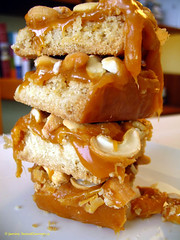
Butterscotch Cashew Bars (p54)
Incredibly easy but far too sweet—the butterscotch topping could be halved or quartered and attain a sweet-salty balance. Murphy suggests the quantity was sufficient for 24 bars, written—I cut it into 30 bars and still found it too sweet (even my sugar-loving colleagues thought it was sugar overload).


Carrot Cake with Fresh Orange Cream Cheese Frosting (p 114)
Moist moist moist and not heavy like many carrot cakes I’ve tried. The orange zest in the cream cheese frosting was delicious. I’ve since returned to the frosting recipe, cut down the sugar a bit and substituted extract for zest. The cake will probably be a regular star from my kitchen…probably as muffins.

Double-crusted Caramel Apple Pie (p 156) made with Flaky Pie Dough (p137)
Murphy recommends plain flour for the crust, instead of pastry flour. The crust was flaky enough and wasn’t at all chewy. I will give her full points for the caramel sauce instructions. I have never been able to make an edible caramel before, but I followed her instructions and produced a luscious caramel sauce that rivalled (and dare I say surpassed) any I’ve had from the shops or restaurants.

Savory Muffins: Bosc Pear, Blue Cheese and Walnut Muffins (p8)
This is a variant of the only savoury recipe in the book—which is why I made them. Oh my word these were good—the flavour combination is classic and just ever-so elegant.

The Sweet Melissa’s Baking Book is a good general-purpose sweetie baking book. The flavour combinations are fresh and inspired and will make anyone who follows her instructions a favoured baker.


So how does it rate?
Overall: 3.75/5

The breakdown:
Recipe Selection: 4/5
Writing: 3.5/5
Ease of use: 3.5/5
Yum factor: 4/5
Table-top test*: Pretty much lies flat

Kitchen comfort-level: Novice-intermediate
Pro: Good kitchen tips make these sweet tips accessible to even neophyte bakers.
Con: A little heavy handed with the sugar, but easily fixable.

* I was reminded that a cookbook writer friend judged a cookbook partially on its ability to lie flat on a table, without without (eek!!) cracking the spine. Hey…who really wants to fight to keep a book open while trying to sort out its instructions?

cheers!
jasmine


AddThis Social Bookmark Button

02 April 2008

On My Shelves: Dish Entertains

During my hiatus I received a number of wonderful cookery books from publishers. I'm working my way through the backlog and will post reviews from time to time .

Many thanks to the good people at Harper Collins for sending this book to me. In interest of full disclosure: I've met Trish, taken classes at her cooking studio and was part of a group recipe testing for this publication. My photos of that cooking session can be found here.


Dish Entertains: everyday simple to special occasions
By Trish Magwood
HarperCollinsCanada
256 pages; $44.95

I think a telltale sign of a good cookery book author is how they position food. I’m not talking about food primpery, nor anything along the lines of food politicking, but instead for me it boils down to feeding your loved ones—friends, family—tasty food that combines familiar dishes with interesting flavour twists in a way that doesn’t make you resent the efforts spent feeding them. I don’t tend to return to recipe writers who over analyse food or seemingly place an almost clinically prescribed regimen that borders on ceremonial fuferah on the acts of meal preparation than the finished food itself. Instead, I prefer making foods under the direction of those who enjoy feeing people. Trish Magwood, owner of Toronto’s Dish Cooking Studio and host of Party Dish, realises the social and familial importance of food; because of this, her first tome, Dish Entertains: everyday simple to special occasions, is a book I happily return to time and time again.

Dish Entertains celebrates people who gather around food, ranging from informal weekday family suppers to larger gatherings where you want to socialise and not be chained to a hob. It also recognises that not all parties are planned weeks or days in advance, but can be impromptu gatherings with just a few hours to whip up nibblies or a full meal for your guests. She also reminds you of the all important fact that entertaining need not mean a crowd of people, but “can even take the form of a meal at the kitchen counter with your spouse.”

Magwood collects more than 120 recipes to take you through many levels and layers of eating. Most of her chapters (hors d’oeuvres, soups, salads, mains, sides and desserts) are further divided into two parts: everyday simple and special occasion. Everyday simple is, as its title indicates is food that can easily be prepared during the week, after you’ve come home from work, school or wherever your day-to-day commitments send you rushing home from. Special occasion recipes are foods that are just as easy to prepare as everyday simple ones, but are a bit grander and easily lend themselves to your own individually defined bit of zhuzhing.

The book is simply designed—large, clean white pages with an unfettered typeface. Magwood’s language is just as uncluttered. Her well-written and logical recipes along with her suggestions and observations (“Who really likes their broccoli raw anyway?”) are direct and informal and read as if she is speaking to you and not at you. She also provide very good cooking and entertaining tips (including portioning food, party rentals and staffing for cocktail parties, and basic information about stocks, fats and tools for soups) and what I call “unrecipes” such as the how to put together a pizza bars—quantities aren’t given, but suggestions as to how to combine flavours on shop-bought breads are just as useful as fully measured and timed recipes.

The recipes are well written and logical and many are accompanied by gorgeous photographs. Magwood provides what she’s become known for: stylish food made with flare. Elegant Cremini Mushrooms Stuffed with Chèvre and Leeks (p28) easily transforms itself to an easy mid-week pasta supper. Her Fresh Pea Risotto (p146) includes key tips to making risotto, along with five just as easy and very tasty looking variations.

Quite honestly, I can’t find much—if anything—to fault with this book. All the foods I prepared at home and during a recipe testing session at Dish Cooking studio about a year and a half ago worked incredibly well and were absolutely delicious. Because I was involved with testing some recipes prior to print, I only cooked a couple of recipes for this review.


Sweet Potato Chipotle Soup (p86)
The only problem I had with this recipe was in finding chipotle peppers in adobo sauce—I went to several shops and finally found a tin tucked away. It was definitely worth the hunt. The soup was easy to make, hearty and combined sweet, smoky and slightly spicy flavours. I served this to friends and they all loved it.

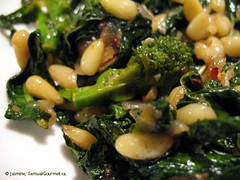
Sautéed Winter Greens (p190)
Incredibly quick and adaptable to any dark winter green that normally scares small children. I made it with rapini and it was devoured by those gathered…


Here are the hors d’oeuvres I worked on during the recipe testing session:

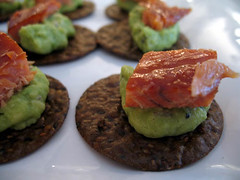
Easy Smoked Trout and Avocado (p 34)
Quite honestly, “easy” is the word for this. Mash the avocado and other flavourings, and then plop onto a cracker and top with the smoked fish. I recall the flavour combination: relatively mild avocado, spiked with heat, paired with the deep, rich smoky trout. Very, very good.


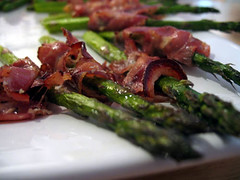
Asparagus Wrapped with Crispy Pancetta and Parmesan (p20)
Easier to do than turning on the tap for a glass of water. Normally I’m not much of an asparagus person, but I’ve made this several times since, preferring the spindly baby spears than the thicker ones.


Here’s what the other testers worked on:

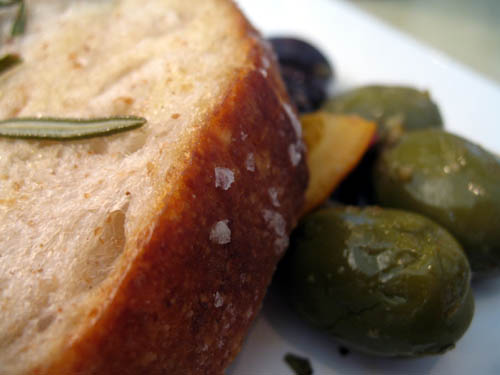
Sourdough Rosemary Boule (p 56) and Baked Olives with Orange and Oregano (p66)
Highly, highly addictive…


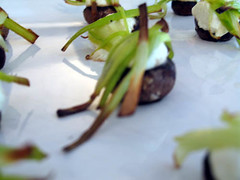
Cremini Mushrooms Stuffed with Chèvre and Leeks (p28)
Again, easy and elegant.


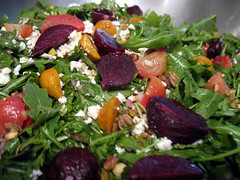
Baby Arugula with Baby Beets, Feta and Pistachios (p126)
The colours are gorgeous and the sweetness that emerges from roasting the veg is amazing. When paired with the briny feta, this salad can easily be turned into a dinner.


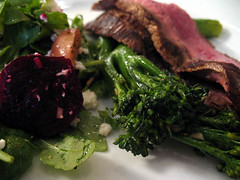
Quick Marinated Flank Steak (p 142)
This very simple marinade provides so much flavour. I remember thinking this steak tasted better than many restaurant steaks I’d had.


Chocolate Pots (p 224)
Normally I shun everything made with rum because of an allergy, but I had to try the teeniest little bit…which, if I recall correctly, turned into me finishing the dessert. Swollen tongue be darned, it was that good.


Regardless of which section or part you cook from, Dish Entertains lets you easily attain delicious food you would be happy to feed family, friends or pretty much anyone who shows up on your doorstep, napkin tucked under chin.

So how does it rate?
Overall: 4.5/5


The breakdown:
Recipe Selection: 4.5/5
Writing: 4.5/5
Ease of use: 4.5/5
Yum factor: 4.5/5

Kitchen comfort-level: Novice-intermediate
Pro: Good selection of easy, stylish and very tasty dishes

Con: People in smaller communities may have difficulties sourcing some ingredients.

cheers!
jasmine


AddThis Social Bookmark Button